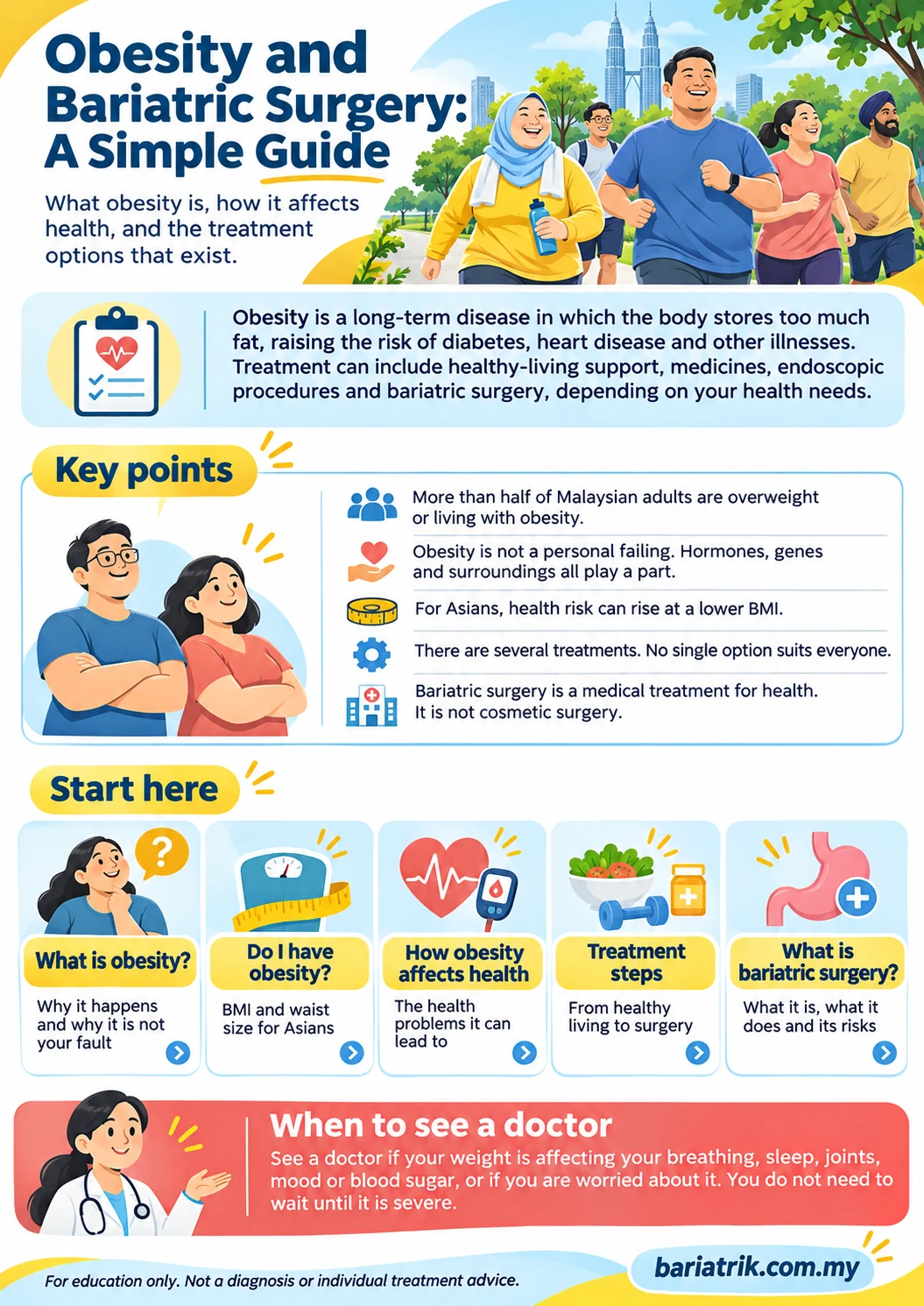
Learn more
Obesity myths and facts, quiz and printable guides
Ten common myths checked against the facts, an eight-question quiz, and one-page guides to print or share.
Written by Dato' Dr Tikfu Gee, MBBS, MS (Surgery), Fellowship in MIS (France)
The short answer
Most myths about obesity come from seeing it as a matter of willpower. The facts show it is a disease the body defends, that Asians face risk at a lower BMI, and that bariatric surgery is a medical treatment, not cosmetic surgery.
Myths and facts
MYTH“People with obesity just eat too much and are lazy.”Tap to see the fact
MYTH“If you really wanted to, you could lose the weight and keep it off.”Tap to see the fact
MYTH“I look fine, so my weight is not a health problem.”Tap to see the fact
FACT
Fat around the organs can harm health without showing. Waist size and blood tests tell more than looks.
MYTH“BMI 25 is where overweight begins for everyone.”Tap to see the fact
FACT
For people of Asian descent, risk rises from a BMI of 23 [6].
MYTH“Bariatric surgery is cosmetic surgery.”Tap to see the fact
FACT
It is a medical treatment for a disease. It does not remove fat from under the skin, and appearance is not its purpose.
MYTH“Surgery is the easy way out.”Tap to see the fact
FACT
It needs preparation, life-long changes, supplements and follow-up.
MYTH“Surgery is the last resort, only when everything else has failed.”Tap to see the fact
FACT
Guidelines consider it by BMI and health conditions. It can be discussed earlier than many people think, and it is still not right for everyone [7].
MYTH“Diet and exercise never work.”Tap to see the fact
MYTH“Weight-loss injections are a permanent fix.”Tap to see the fact
FACT
They work while they are taken. In a trial, most of the weight came back within a year of stopping [12].
MYTH“Shaming people motivates them to lose weight.”Tap to see the fact
FACT
Stigma harms health and keeps people away from care [2].
Quiz: test your knowledge
This quiz is for learning. It cannot diagnose obesity or tell you which treatment is right for you. Nothing is saved.
Score: 0 / 8
Printable one-page guides
Each guide carries the byline and the disclaimer. None carries a clinic name or contact details.
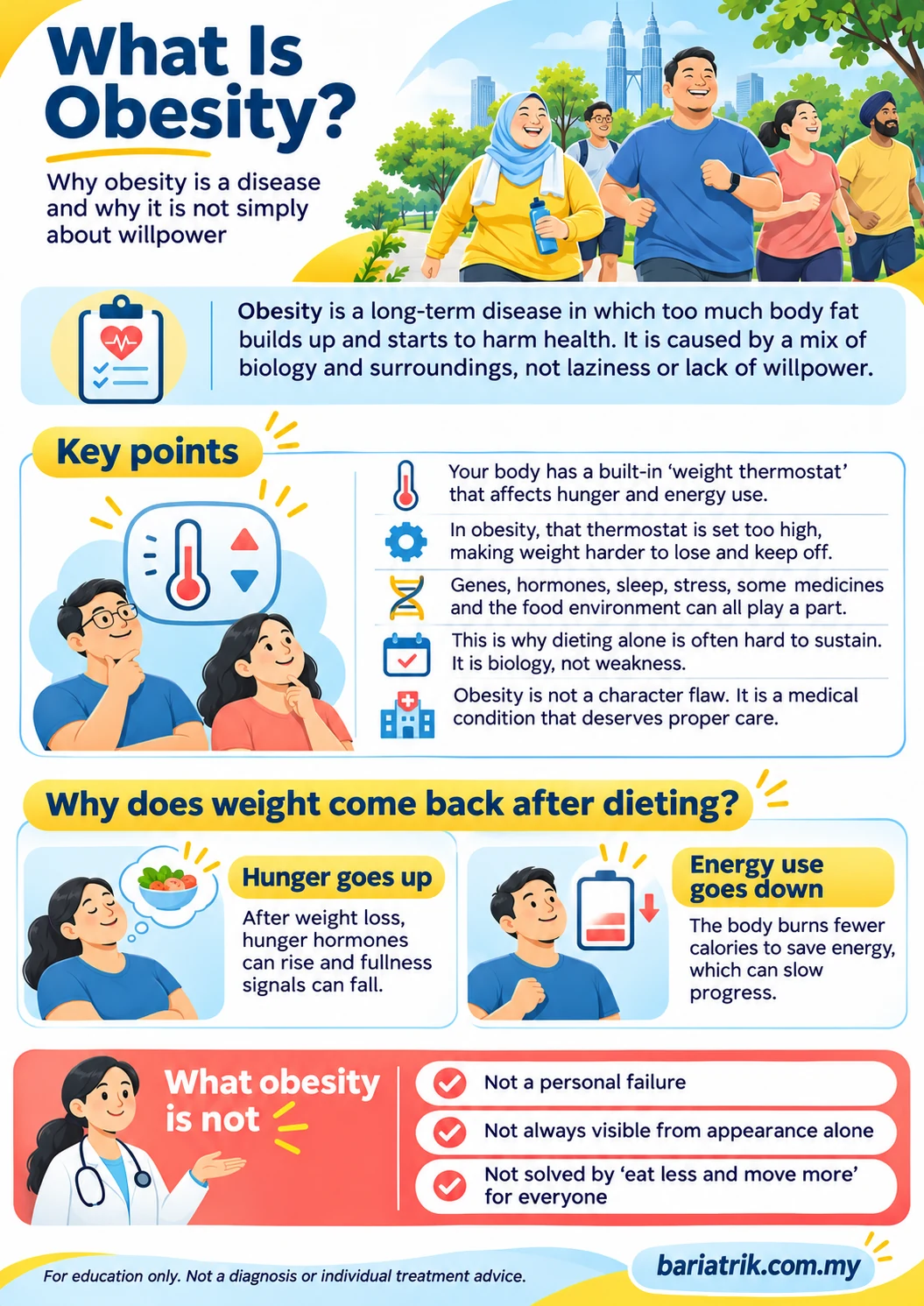
What is obesity?
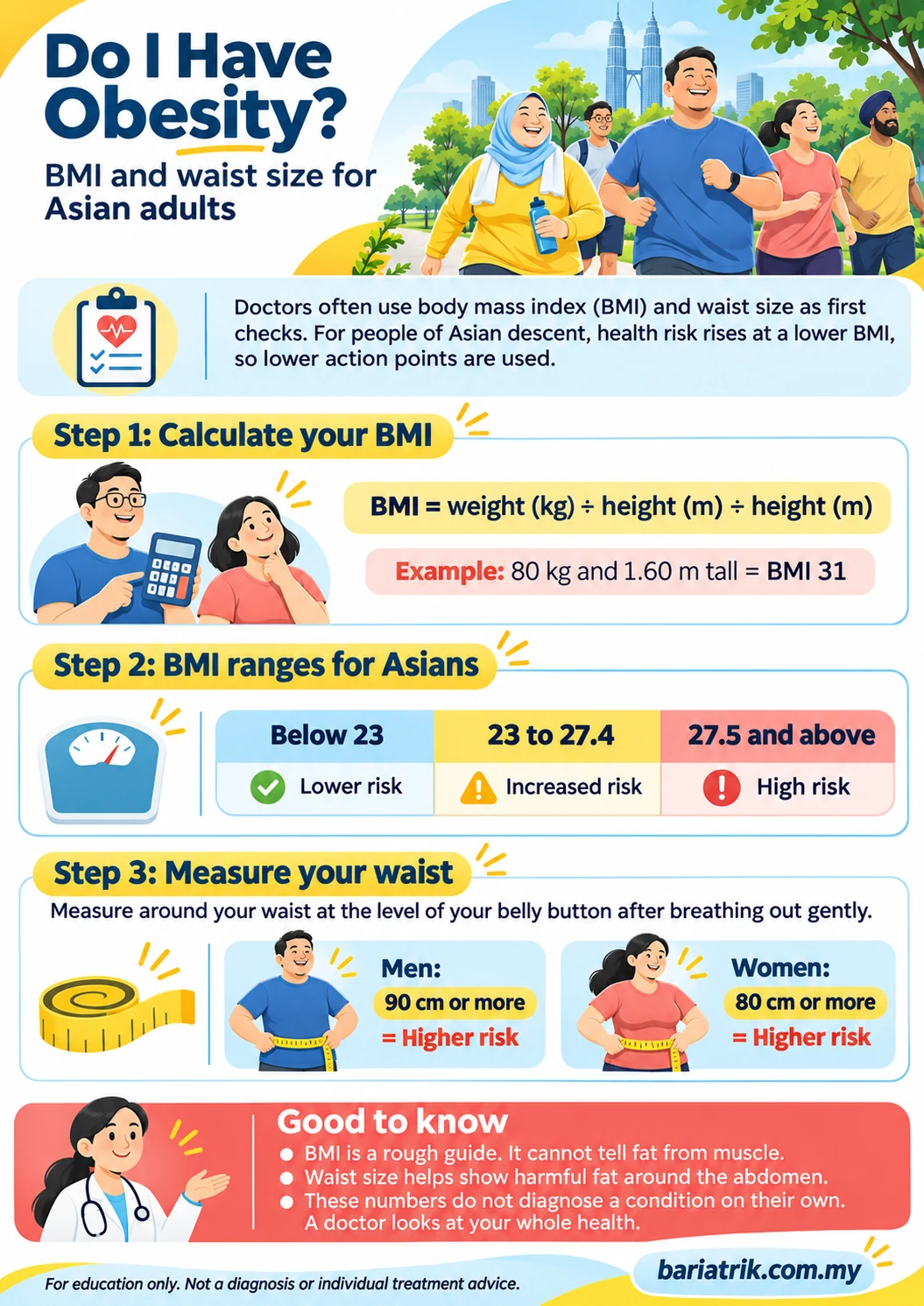
My BMI and waist (Asian adults)
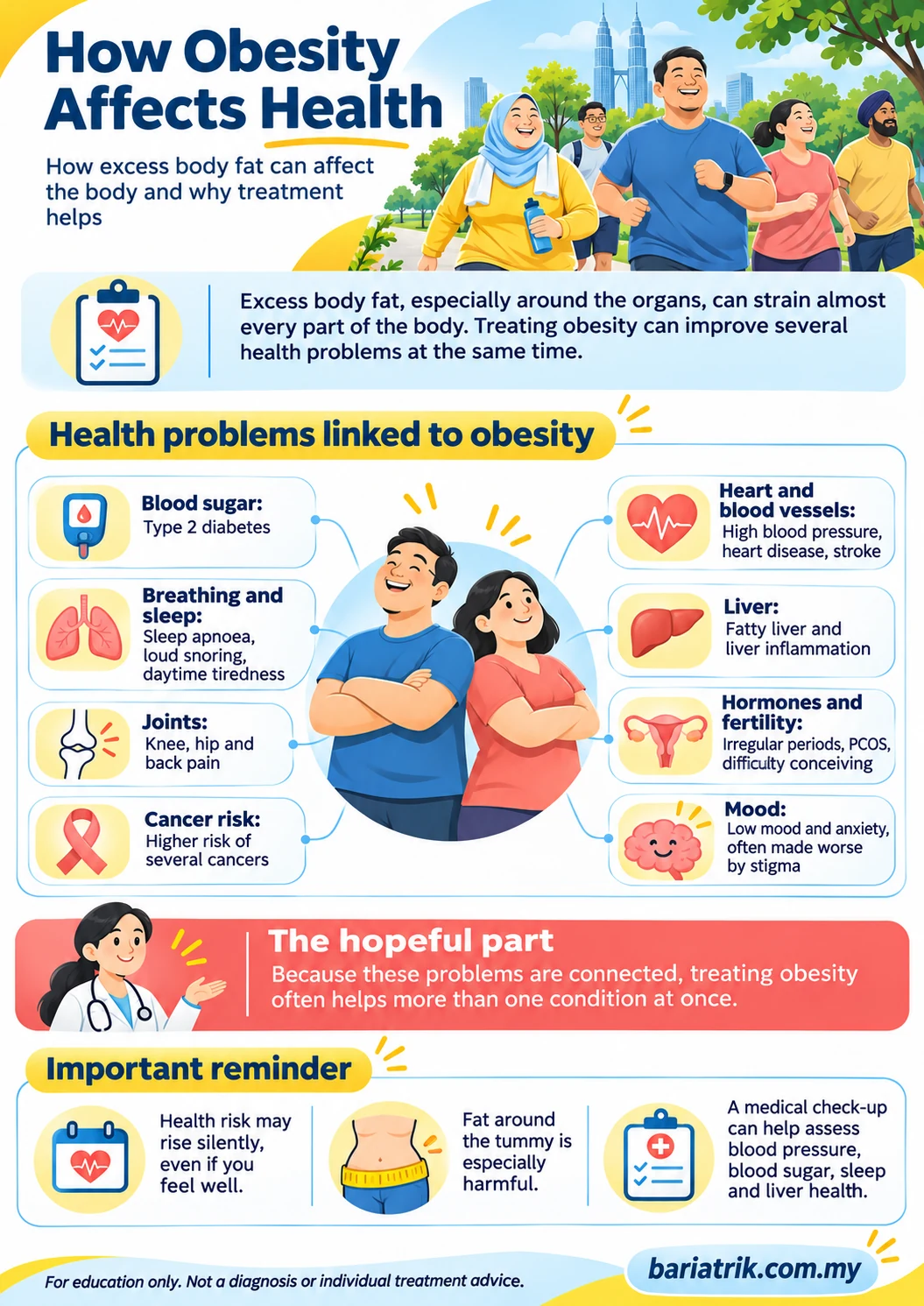
How obesity affects health
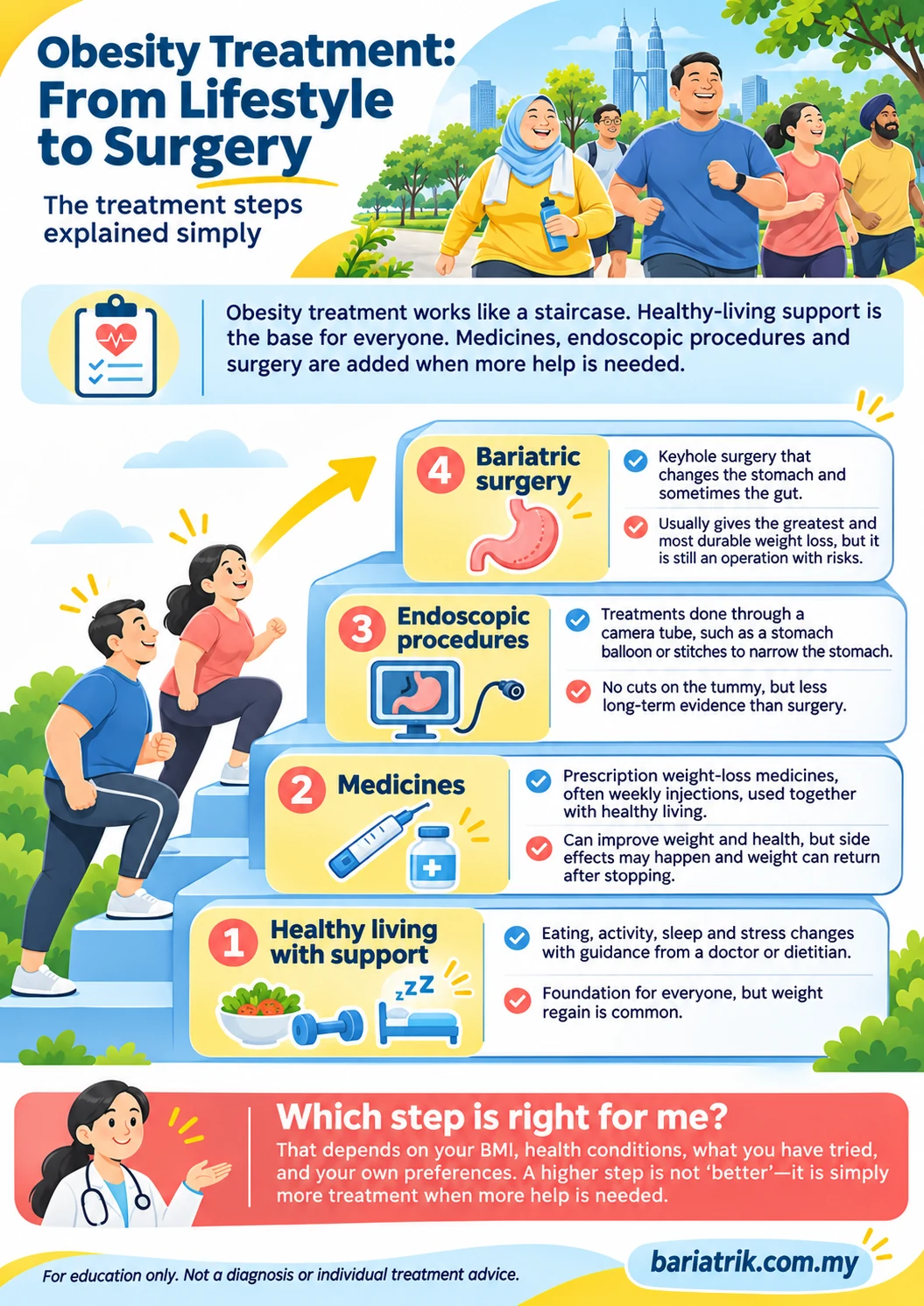
The treatment steps
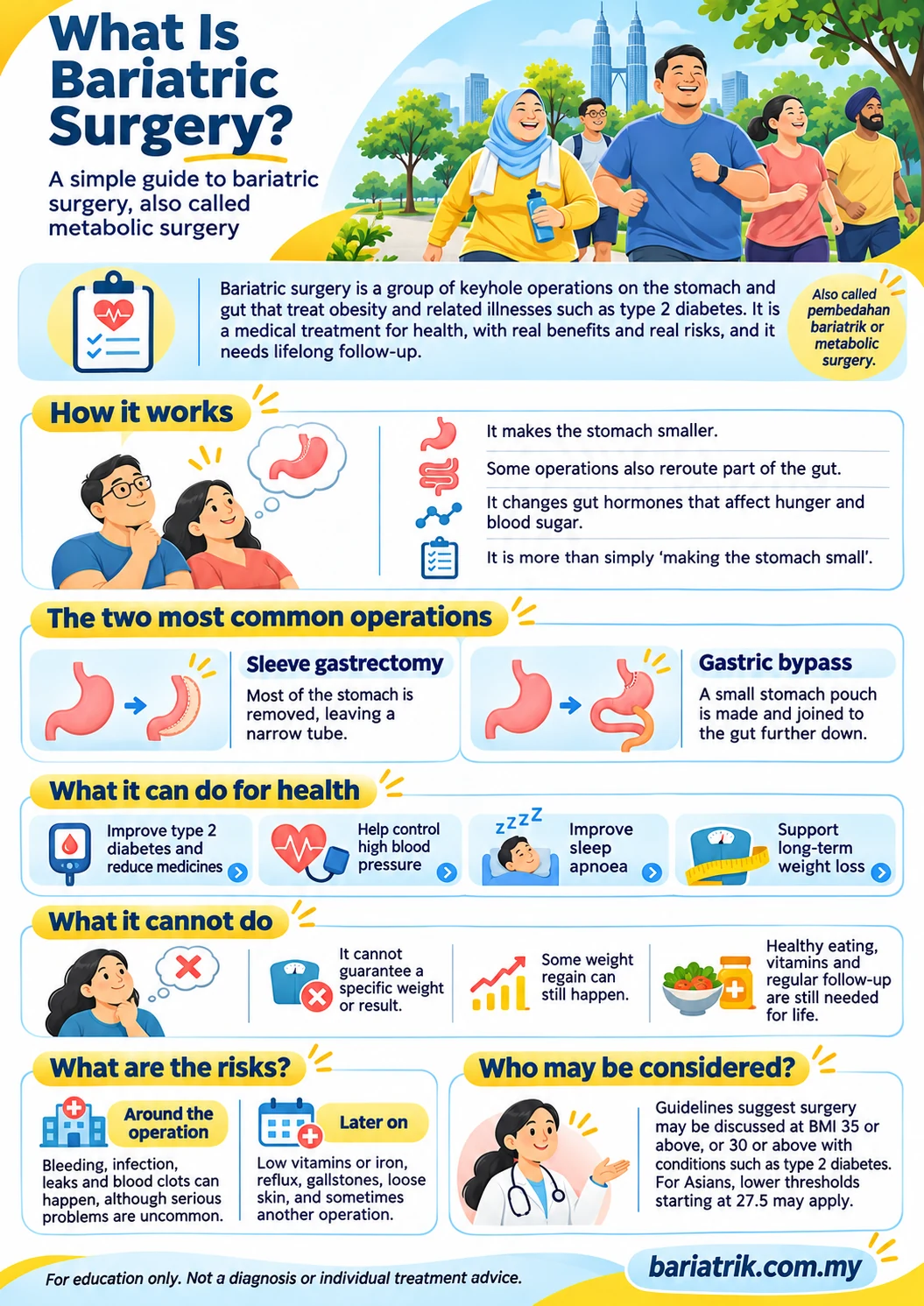
What is bariatric surgery?
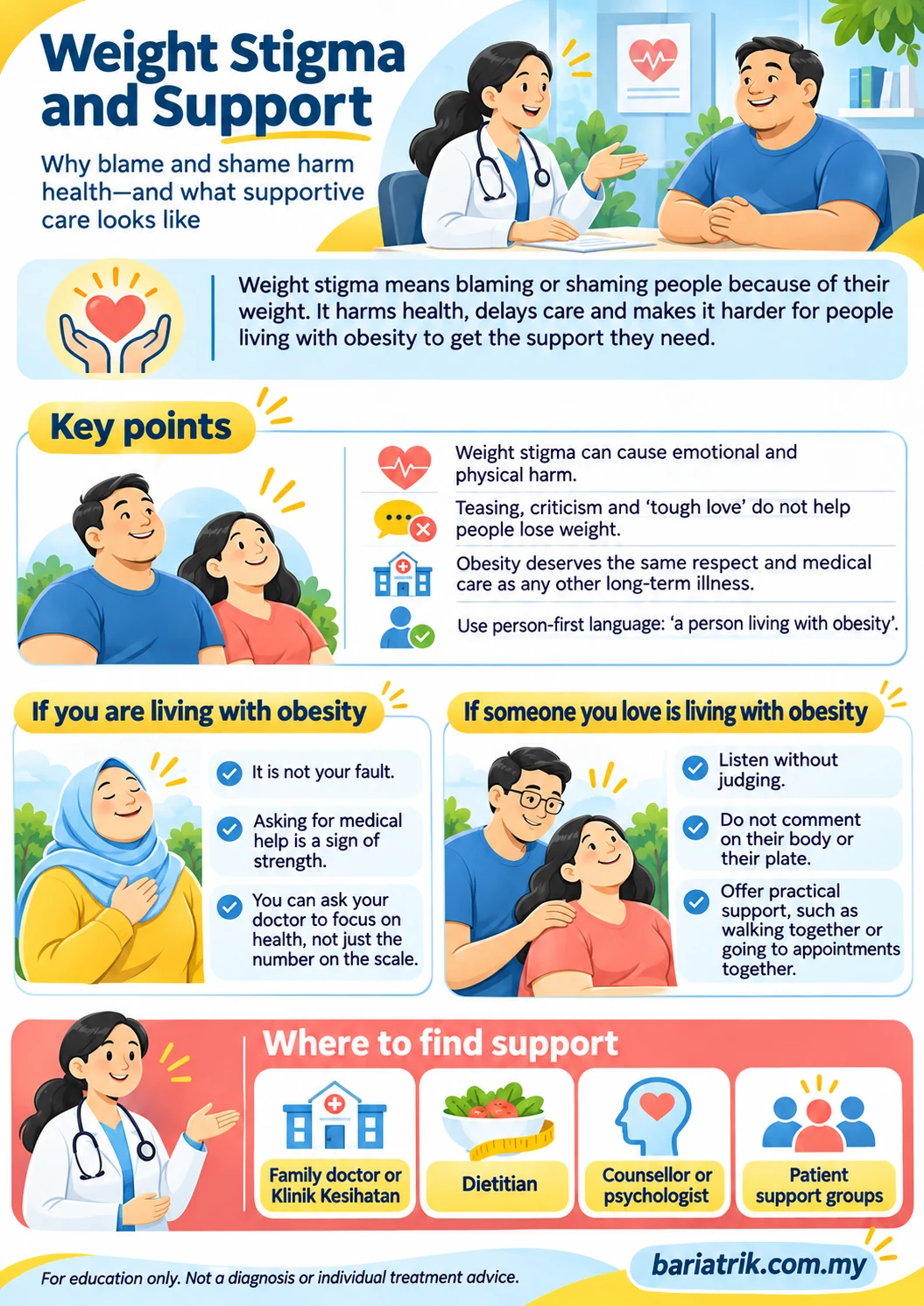
Weight stigma and support

Healthy habits for the family (fridge poster)
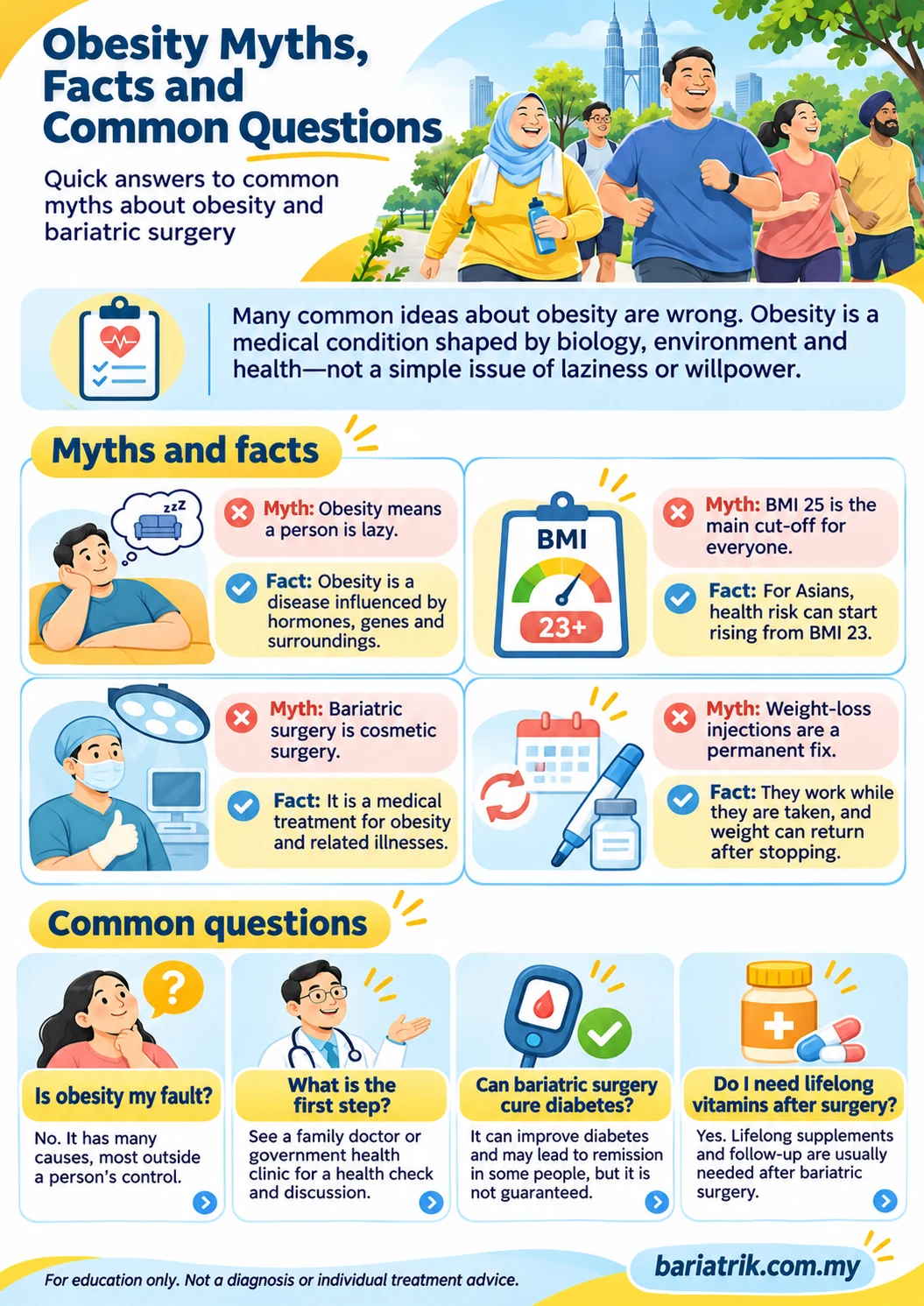
Obesity myths, facts and FAQ
Questions to ask my doctor about my weight
Ten starter questions, with space for answers when printed. [Starter questions drafted for Dato's check.]
- What is my BMI and waist size, and what do they mean for me?
- Is my weight affecting my blood pressure, blood sugar, liver, sleep or joints?
- Which tests do I need?
- What can I change first, and who can help me (dietitian, programme)?
- Would a weight-loss medicine be suitable for me? What are the side effects?
- Am I someone for whom endoscopic procedures or surgery could be discussed?
- What are the benefits and risks of each option for me?
- What happens if I do nothing for now?
- How often should I come back for check-ups?
- Where can I read reliable information?
Read next
References
- [1]Rubino F, et al. Definition and diagnostic criteria of clinical obesity. Lancet Diabetes Endocrinol 2025;13(3):221–262. doi:10.1016/S2213-8587(24)00316-4
- [2]Rubino F, et al. Joint international consensus statement for ending stigma of obesity. Nat Med 2020;26(4):485–497. doi:10.1038/s41591-020-0803-x
- [3]Sumithran P, et al. Long-term persistence of hormonal adaptations to weight loss. N Engl J Med 2011;365(17):1597–1604. doi:10.1056/NEJMoa1105816
- [4]Fothergill E, et al. Persistent metabolic adaptation 6 years after “The Biggest Loser” competition. Obesity (Silver Spring) 2016;24(8):1612–1619. doi:10.1002/oby.21538
- [6]WHO Expert Consultation. Appropriate body-mass index for Asian populations and its implications for policy and intervention strategies. Lancet 2004;363(9403):157–163. doi:10.1016/S0140-6736(03)15268-3
- [7]Eisenberg D, et al. 2022 ASMBS and IFSO indications for metabolic and bariatric surgery. Obes Surg 2023;33(1):3–14. doi:10.1007/s11695-022-06332-1
- [8]Lean MEJ, et al. Primary care-led weight management for remission of type 2 diabetes (DiRECT). Lancet 2018;391(10120):541–551. doi:10.1016/S0140-6736(17)33102-1
- [9]Lean MEJ, et al. Durability of a primary care-led weight-management intervention for remission of type 2 diabetes: 2-year results of DiRECT. Lancet Diabetes Endocrinol 2019;7(5):344–355. doi:10.1016/S2213-8587(19)30068-3
- [12]Wilding JPH, et al. Weight regain and cardiometabolic effects after withdrawal of semaglutide: the STEP 1 trial extension. Diabetes Obes Metab 2022;24(8):1553–1564. doi:10.1111/dom.14725